Common Mobile App Development Mistakes First-Time Founders Make
I’ve worked with a lot of first-time founders who were genuinely smart and technical.
Still, their first mobile app almost always went sideways.
Not because the idea was bad — but because small, avoidable decisions quietly stacked up and killed timelines, budgets, and team morale.
Most of these mistakes don’t show up in tutorials.
They show up at month 5 when everything feels slower and twice as expensive.

Why this problem actually happens
It usually starts with pressure.
You have a limited runway. Investors or early users are waiting. You want something in the store “as fast as possible.”
So decisions get rushed.
Not stupid decisions — just short-term ones.
Things like:
- “Let’s build iOS and Android separately so we move faster”
- “We’ll polish everything before launch”
- “Let’s add this feature now, it’s small”
- “We can fix the architecture later”
In small teams (2–5 devs), every extra choice multiplies workload, which is why Mobile App Development decisions need to stay practical and tightly scoped from the very beginning.
Two codebases.
Two bug lists.
Two release pipelines.
Suddenly your “simple MVP” behaves like an enterprise product.
I’ve seen a 3-person team accidentally create the workload of 8 developers just through early decisions.
That’s usually where things break.
Where most developers or teams get this wrong
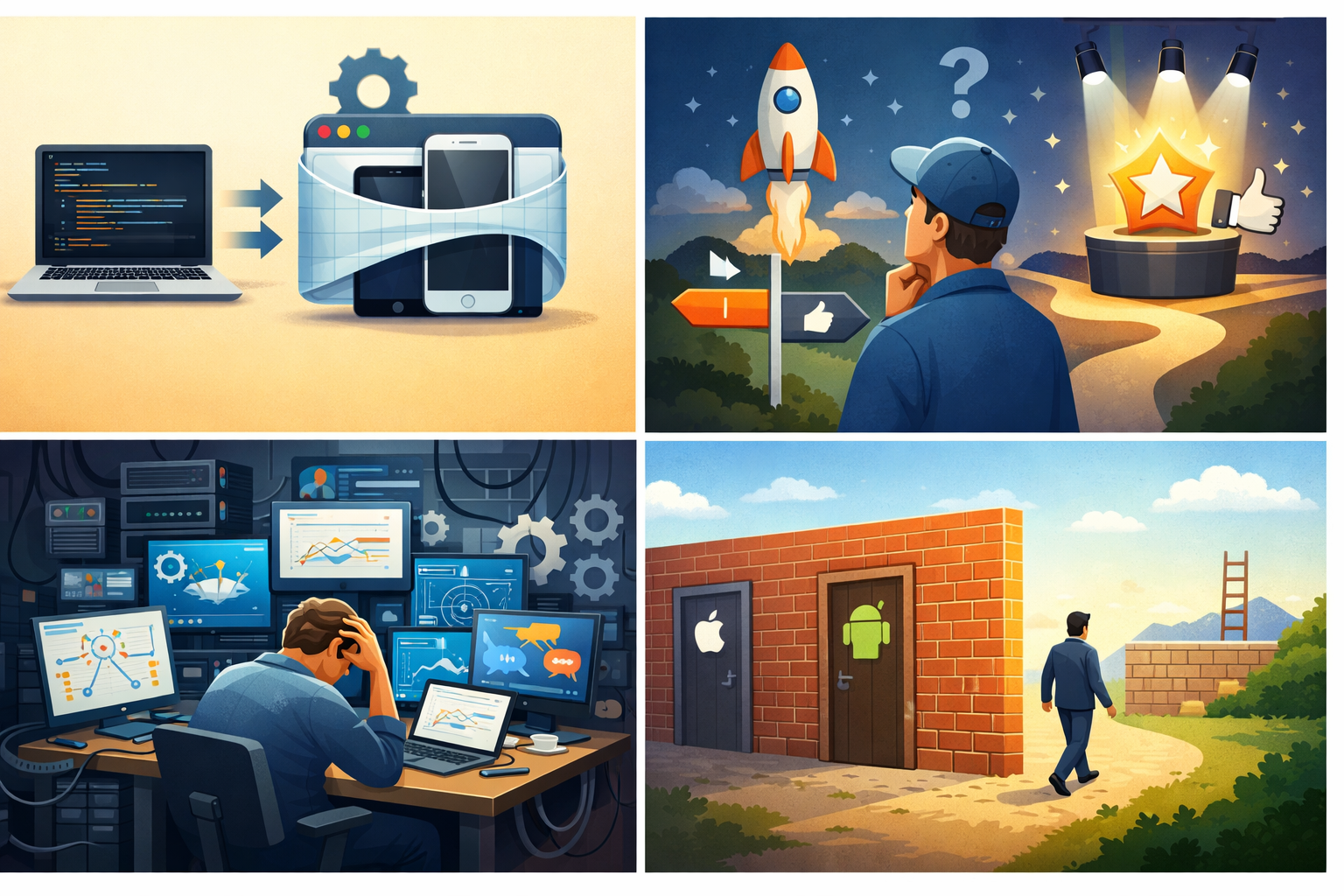
1. They think version 1 must look complete
First-time founders often treat V1 like a finished product instead of a test.
So the team spends weeks polishing UI, animations, and edge cases that users may never care about, even though early product design should usually support validation clarity rather than make an early product feel artificially complete.
By the time you launch, you’ve burned time validating the wrong things.
Founders often say:
“If we launch half-baked, users won’t trust us.”
So the team builds:
- onboarding flows
- notifications
- analytics
- chat
- admin panels
- animations
Before validating if anyone even wants the core feature.
I’ve seen teams spend 4 months polishing UI… only to learn users didn’t need half the app.
2. They split the team too early (native iOS + Android)
Running two separate codebases doubles everything — bugs, features, releases, and maintenance. Small teams end up context-switching all day instead of shipping.
What feels “professional” early usually cuts your speed in half.
This one hurts the most.
I’ve seen:
- 2 devs → 1 on iOS, 1 on Android
- Each blocked waiting on backend changes
- Features shipped twice
- Bugs fixed twice
- Velocity gets cut in half instantly.
You don’t notice in week 1.
You feel it badly by month 3.
3. They over-engineer “for scale”
Developers build complex systems for traffic that doesn’t exist yet.
Microservices, queues, and fancy infra slow down simple changes and add debugging overhead. For early apps, complexity hurts more than it helps.
This is classic developer thinking.
“We might have 1M users someday, so let’s design for that now.”
So they add:
- microservices
- complex auth layers
- fancy infra
- premature caching systems
For an app that has 200 users.
Meanwhile, basic features aren’t even stable.
I’ve personally removed more architecture than I’ve added in early startups.
Simple systems survive longer.
4. They accept every feature request
Every user asks for something different, and founders try to please everyone.
The product slowly becomes cluttered and harder to maintain. More features mean more code, more bugs, and slower releases.
In most startups, this happens because:
- founders talk to 5 users
- each asks for something different
- team builds all of them
Now the product feels messy and inconsistent.
And every new feature slows future development.
Read More → Cross Platform Apps For Non Technical Founders

Practical solutions that work in real projects
These aren’t theories. These are things I now default to after getting burned.
Step 1 — Cut the scope until it feels uncomfortable
Most first-time teams still keep too much in V1 because everything feels “important.”
In reality, every extra feature slows development and hides whether the core idea even works.
If removing a feature makes you slightly nervous, you’re probably finally close to the right scope.
If your feature list feels “reasonable,” it’s still too big.
For V1, I aim for:
- 1 core workflow
- 1 user type
- 1 happy path
That’s it.
If the app can’t be explained in one sentence, it’s too complex.
Trade-off:
You’ll feel like you’re shipping less.
But you ship 3–4x faster.
Step 2 — Start with one shared codebase
Maintaining separate iOS and Android apps early doubles your work without doubling progress, which is why teams usually move faster when product logic, backend coordination, and release cycles stay aligned around one shared delivery approach.
A shared codebase keeps the team focused on one build, one bug list, and one release cycle.
For small teams, fewer moving parts usually means faster shipping and fewer headaches.
For small teams, shared code wins almost every time.
I prefer:
- React Native
- Flutter
- or similar cross-platform setups
Not because they’re perfect.
But because:
- one team
- one repo
- one release
- one bug fix
Velocity stays high.
Trade-off:
Slightly less native polish.
But 2x faster iteration usually matters more than perfection early.
Step 3 — Delay “nice-to-haves” aggressively
Early on, “small extras” like animations, themes, or advanced settings quietly eat up days of development time.
They feel harmless, but they distract from validating the core feature users actually came for, which is why understanding the mobile app development mistakes to avoid can help founders stay focused on the product decisions that actually matter in the early stage.
If it doesn’t directly help someone complete the main task, it can wait until after launch.
Before adding anything, ask:
“Does this help us validate the core idea?”
If not → backlog.
Examples I usually delay:
- fancy animations
- dark mode
- advanced settings
- deep analytics
- background sync
None of these matter if users churn on day 1.
Step 4 — Build boring architecture first
In early projects, simple systems are easier to ship, debug, and change quickly, which is why release processes should support a stable delivery flow instead of adding infrastructure complexity before the app has even proven demand.
A basic monolith with fewer services usually beats a smart setup with too many moving parts.
Boring code might not look impressive, but it keeps the team fast and the app stable.
For early apps:
- simple backend
- monolith
- minimal services
- fewer moving parts
Boring is stable.
Every extra layer adds failure points and debugging time.
You can always split later when traffic forces you.
It’s much harder to simplify later.
Step 5 — Release weekly, not monthly
Long release cycles hide problems and delay real feedback from users.
Shipping weekly forces you to keep changes small, catch bugs early, and adjust quickly.
For small teams, faster releases usually mean faster learning — and fewer painful surprises later.
Small teams need fast feedback.
Weekly releases expose:
- bad assumptions
- UX confusion
- broken flows
Earlier.
Long release cycles hide problems until they’re expensive.
When this approach does NOT work
Being honest — these rules aren’t universal.
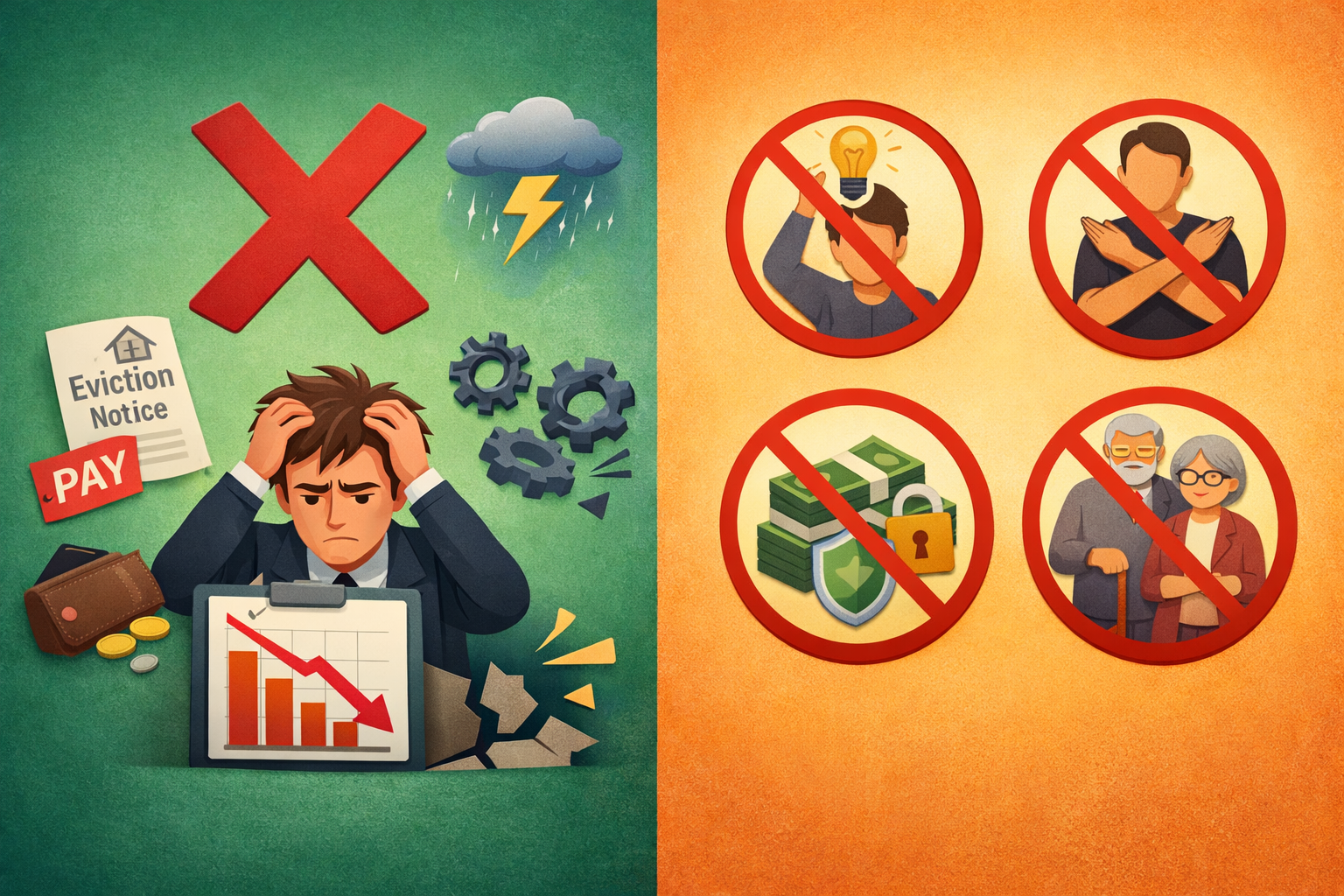
This approach breaks down when:
- You’re building a heavily regulated app (finance, healthcare)
- You need deep native features (AR, low-level hardware, heavy graphics)
- You already have millions of users
- Performance is your core differentiator
In those cases, native apps or stronger architecture upfront might make sense.
But for most first-time founders with 0 → 10k users?
Speed > perfection.
Almost every time.
Best practices for small development teams
These habits saved us more than any tech choice.
Keep decisions reversible
Early on, you’ll make a lot of guesses, and many of them will be wrong.
If a decision is hard to undo — like a complex architecture or permanent tech choice — it can trap the team later.
Prefer options you can change easily, so mistakes stay cheap and progress stays fast.
Track time per feature
If small features start taking 5–7 days, it’s usually not a people problem — it’s a complexity problem, and testing often becomes slower as hidden dependencies and unstable flows start increasing across the app.
Too many dependencies, edge cases, or messy code slow everything down.
Feature time is an early warning signal that your app is getting harder to change.
Freeze scope during sprints
Changing requirements mid-sprint looks harmless, but it breaks focus and planning.
Developers half-finish things, context-switch, and nothing actually ships cleanly.
Lock the scope for a week or two, then adjust — not every day.
Prefer deleting over adding
Every new line of code adds maintenance cost, even if it’s “just a small feature.”
I’ve seen apps improve more by removing features than by adding new ones.
Less code means fewer bugs, simpler testing, and faster development.
Measure retention, not downloads
Downloads feel good but don’t tell you if the product is useful.
If users install and never come back, nothing else matters.
Retention shows whether you’re solving a real problem or just getting curiosity clicks.
Conclusion
Most first-time founders don’t fail because they lack skill.
They fail because they try to build too much, too soon, with too much complexity.
I’ve watched small teams burn months polishing things users never cared about.
The teams that survive do the opposite:
Smaller scope.
One codebase.
Boring architecture.
Ship fast.
Simple isn’t lazy — it’s what keeps you alive long enough to learn.
FAQs
Usually no. For teams under 5 devs, shared codebases move much faster and reduce maintenance overhead.
Yes for most products. Performance issues rarely matter early compared to slow development speed.
One core workflow. Anything beyond that usually delays learning.
Only after real usage pain appears. Premature scaling mostly adds complexity.
Multiple platforms, too many features, and over-engineering quietly multiply the workload.
References
Written by

Paras Dabhi
VerifiedFull-Stack Developer (Python/Django, React, Node.js)
I build scalable web apps and SaaS products with Django REST, React/Next.js, and Node.js — clean architecture, performance, and production-ready delivery.
LinkedIn