How Custom Software Helps Small Businesses Scale Faster in 2026
If you’re running a startup, a growing SME, or making tech decisions for your business in India, you’ve likely faced a dilemma: can off-the-shelf tools truly keep up with your growth?
As customer expectations evolve, operations become more complex, and regulatory frameworks tighten, relying on generic software can quickly become a bottleneck.
By 2026, businesses that strategically invest in custom software will be poised to gain a competitive edge, streamline operations, and scale faster than those relying solely on packaged solutions.
Custom software isn’t just another expense—it’s a strategic investment that empowers Indian businesses to grow efficiently, adapt quickly, and deliver unique customer experiences.
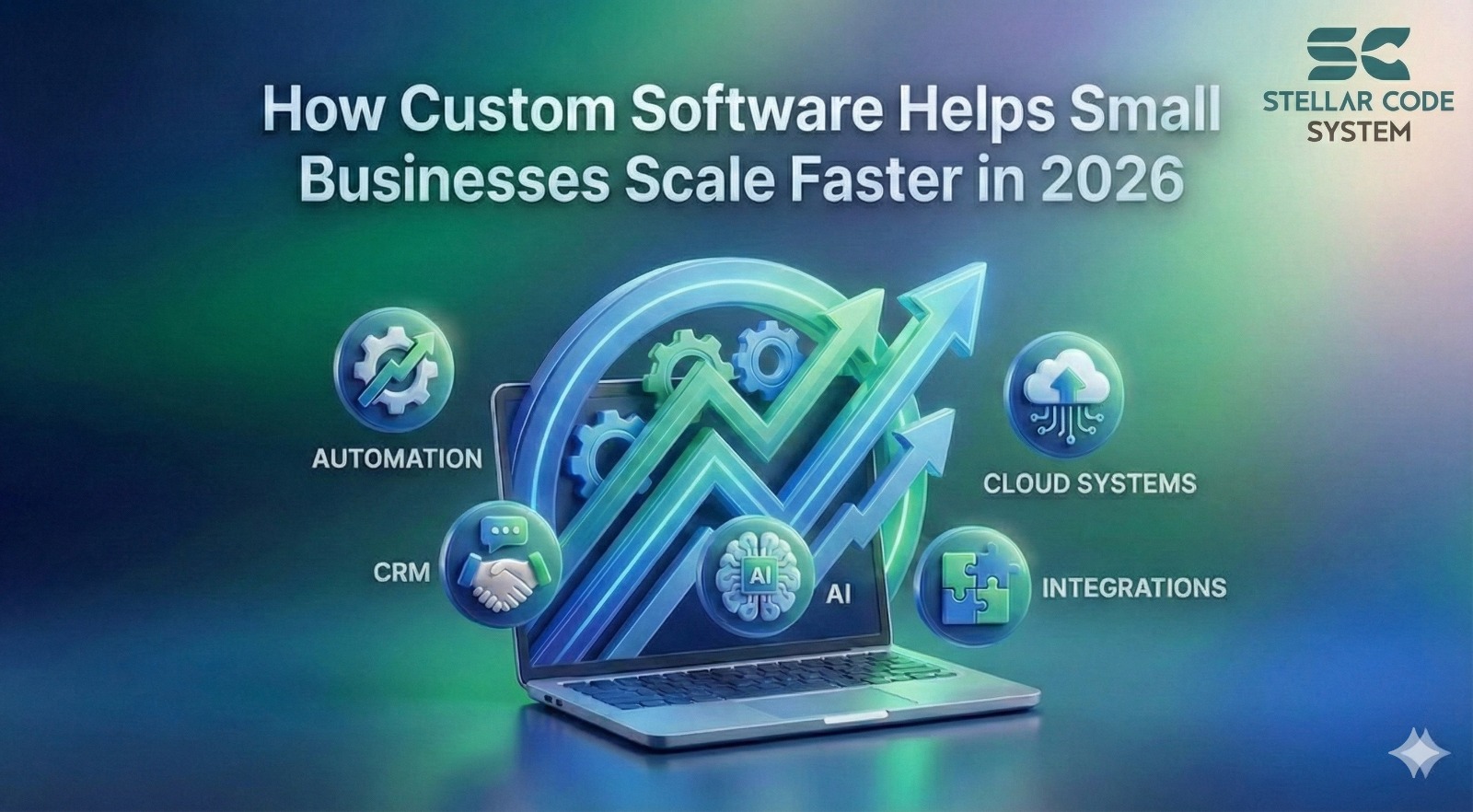
By 2026, Indian businesses scaling with custom software gain an advantage through better automation, integrations, flexibility, and customer experience.
Off-the-shelf tools often fail as data grows, workflows become complex, and teams need unified systems across CRM, ERP, analytics, and operations.
Custom software becomes a long-term business asset—built around your workflows, designed to scale, and tailored to your customers.
The Rising Demand for Custom Software in India
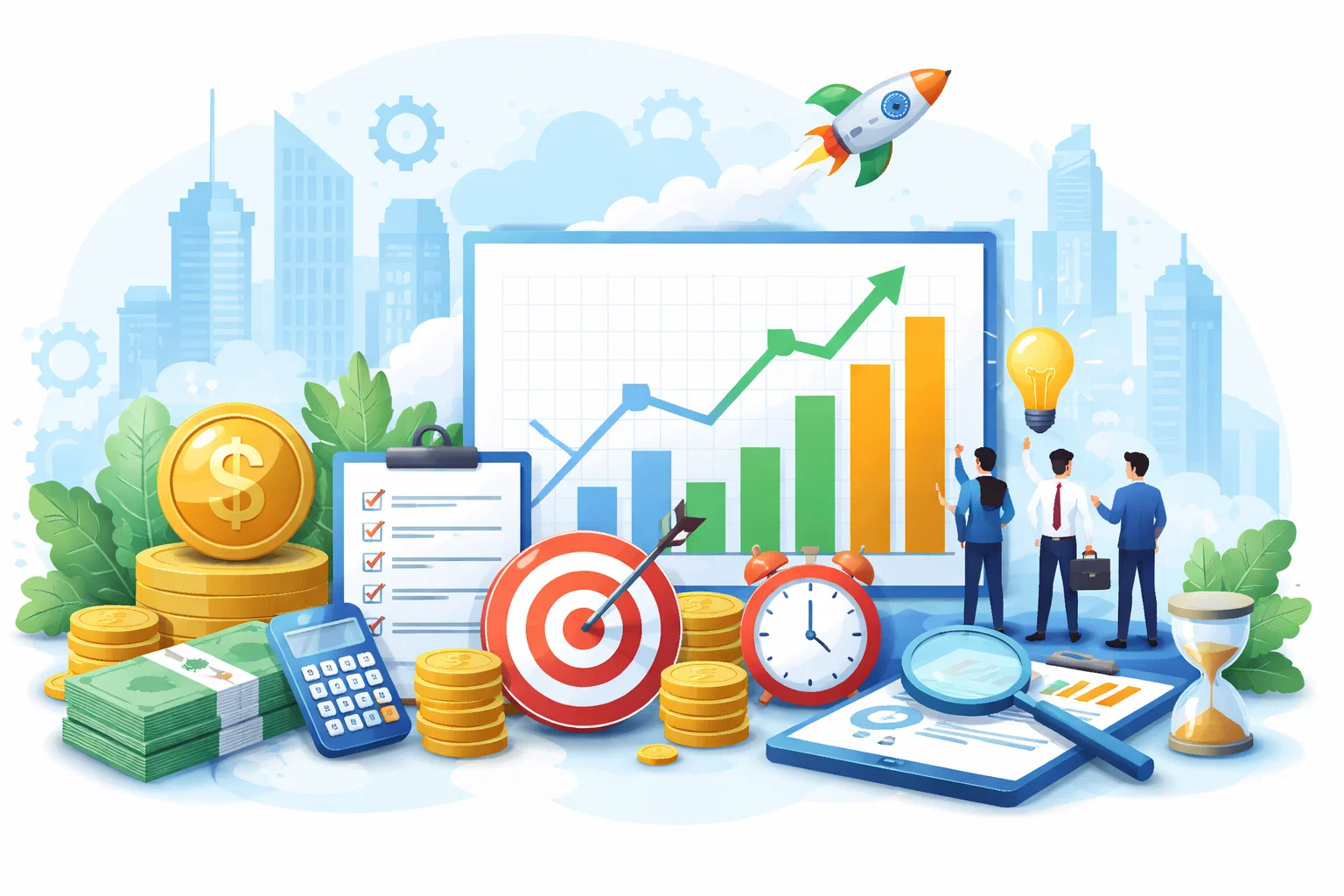
India’s tech landscape is booming. The custom software development market in India is projected to surpass USD 10 billion by 2030, driven by rapid digital adoption across fintech, healthcare, e-commerce, and logistics.
Businesses increasingly view software not as a commodity but as a strategic enabler. Companies that embrace bespoke platforms can:
Reduce operational bottlenecks
Custom software removes manual dependencies and disconnected systems that slow down daily operations. It creates smoother workflows, faster processing, and better coordination across teams.
Automate repetitive tasks
Automation eliminates time-consuming manual work like data entry, reporting, and approvals. This improves accuracy, saves costs, and frees teams to focus on high-value activities.
Build scalable architectures for long-term growth
Scalable systems are designed to handle increasing users, data, and features without performance issues. They support business expansion without constant rebuilding or system limitations.
Offer personalised experiences that customers now expect
Custom platforms use data to tailor user journeys, recommendations, and interactions. This increases engagement, customer satisfaction, and long-term retention.
Why Off-the-Shelf Software Often Falls Short

When your business is small, off-the-shelf solutions may seem sufficient. But as you scale, these tools often become restrictive, expensive, and disconnected from how your team actually works.
Data volumes explode, and reporting becomes complex
As businesses grow, data comes from multiple sources and becomes harder to manage. Custom systems centralise information and deliver real-time, accurate reporting.
You need seamless integration across multiple platforms (CRM, ERP, analytics)
Disconnected tools create inefficiencies and data silos. Custom software connects all platforms into one unified, automated workflow.
Customers expect personalised, frictionless experiences
Modern users demand fast, intuitive, and tailored digital experiences. Custom solutions enable personalisation, automation, and smoother customer journeys.
The core problem with generic tools
Generic tools often restrict flexibility, require recurring fees, and can’t adapt to evolving business needs. Custom software grows with your business and aligns with your long-term strategy.
Key Benefits of Custom Software for Indian Businesses

Boost Efficiency and Automate Processes
Custom software transforms repetitive manual workflows into automated processes, freeing your team to focus on growth and innovation.
Example: A mid-sized logistics company in Bangalore automated shipment tracking and invoicing using a custom platform. Within 6 months:
- Team productivity rose by 35%
- Operational costs dropped by 20%
- Manual errors were reduced by over 70%
By tailoring software to your processes, you reduce friction, save time, and accelerate business growth.
Scale Seamlessly with Flexibility
Custom platforms are built for your unique business model. Whether you’re adding new product lines, expanding to different cities, or onboarding more users, your software evolves with you.
Cloud-native architecture
Cloud-native systems automatically scale resources based on traffic and usage. This reduces infrastructure expenses while supporting rapid business growth.
API integrations
APIs enable seamless data flow between platforms and services. This creates unified operations, better visibility, and automated workflows.
Modular design
Software is built in independent, flexible modules. This allows faster upgrades, lower costs, and easier long-term maintenance.
Case study: Healthtech startup in Mumbai
A healthtech startup integrated custom patient management and telemedicine features. Within a year, they expanded services to 3 new cities without increasing operational costs.
Gain Data-Driven Insights
Custom software often includes dashboards, analytics, and business intelligence tools, giving decision-makers real-time visibility into operations, customer behaviour, and revenue streams.
Identify inefficiencies quickly
Rapidly detect process gaps, wasted effort, and performance bottlenecks across operations. Fix problems early before they impact cost, quality, or delivery.
Allocate resources optimally
Distribute budget, people, and time based on real workload and business priorities. This ensures maximum output with minimum waste and avoids over- or under-utilisation.
Predict demand trends and adjust strategy proactively
Analyse patterns to forecast future customer and market needs.
This helps businesses plan ahead, reduce risk, and stay competitive.
Insight: Companies leveraging custom analytics in India reported a 25–30% improvement in strategic decision-making speed.
Achieve Competitive Differentiation
In competitive markets like e-commerce, fintech, or edtech, using the same off-the-shelf tools as your competitors won’t make you stand out.
Custom software allows you to:
Offer personalised user experiences via mobile apps or dashboards
Custom software tailors interfaces, features, and content to each user’s role and behaviour. This improves engagement, usability, and overall customer satisfaction.
Build workflows aligned to your unique business model
Systems are designed around how your business actually operates. This removes unnecessary steps, reduces errors, and boosts productivity.
Meet compliance requirements without hacks or workarounds
Custom platforms embed regulatory rules directly into system logic. This ensures security, audit readiness, and long-term operational stability.
Example: Subscription-based edtech platform
An Indian subscription-based edtech platform implemented custom learning paths for students. This unique feature increased student retention by 40% over 6 months.
Emerging Trends Indian Businesses Should Leverage in 2026

AI and Machine Learning
AI helps businesses forecast trends, automate repetitive tasks, and make data-driven decisions.
Machine learning improves accuracy over time by learning from real user and system data.
Cloud and Serverless Architecture
Cloud platforms enable flexible scaling without heavy upfront hardware investment.
Serverless systems reduce maintenance effort while automatically handling traffic spikes.
IoT Integration
IoT devices collect live data from equipment, vehicles, and environments.
This enables instant tracking, predictive maintenance, and operational optimization.
Hyper-Personalisation
Systems adapt experiences based on user roles, behavior, and preferences.
This boosts engagement, productivity, and overall customer satisfaction.
Adopting modern technologies inside custom software ensures you’re leading the market rather than catching up.
Common Challenges and How to Overcome Them
While the benefits are clear, Indian businesses face obstacles. Here’s how to overcome the most common ones:
Talent shortage
Experienced custom software developers are limited and highly competitive to hire.
This makes choosing the right development partner critical for project success.
Cost concerns
Custom development involves initial costs for planning, design, and engineering.
However, long-term efficiency gains usually recover the investment within a year or two.
Quality assurance
Rigorous testing protects systems from failures, data loss, and security risks.
High-quality assurance is essential in industries where trust and compliance matter most.
Solution
Partner with a reliable Indian software development company that offers:
- Domain expertise in your industry
- Modular and scalable solutions
- Long-term maintenance and support
When to Hire a Custom Software Partner
Consider a software development agency if your business:
Is too complex for off-the-shelf tools
Standard software cannot fully support unique workflows or business rules.
Custom solutions provide flexibility and precise control over operations.
Plans to expand into new markets or add product lines
Growth introduces new users, processes, and system requirements.
Custom software ensures scalability without disrupting existing operations.
Needs automated workflows to boost efficiency
Manual tasks slow down teams and increase the risk of errors.
Automation streamlines processes, saving time and operational costs.
Requires data-driven insights for decision-making
Business decisions need accurate, real-time performance data.
Custom dashboards and analytics turn raw data into actionable insights.
Wants to differentiate from competitors
Unique software enables exclusive features and better customer experiences.
This creates stronger brand value and competitive advantage.
Operates in a regulated industry
Compliance demands strict security, documentation, and process controls.
Custom systems ensure regulations are met without limiting innovation.
Tip
Evaluate potential partners based on their industry experience, portfolio, and ability to provide ongoing support.
Real Results from Indian Businesses
These examples show that custom software isn’t a cost—it’s an investment with measurable ROI.
E-commerce startup
A custom order management system automated inventory, invoicing, and fulfillment workflows.
This streamlined operations, improved customer satisfaction, and supported rapid scaling.
Healthcare provider
The platform digitized appointments, records, and billing processes into one secure system.
This reduced manual work, minimized errors, and accelerated daily operations.
Fintech company
Real-time analytics dashboards centralized financial and compliance data.
This improved decision-making, cut reporting time, and strengthened regulatory readiness.
Real-time analytics dashboards centralized financial and compliance data.This improved decision-making, cut reporting time, and strengthened regulatory readiness.
Step-by-Step Guide to Choosing the Right Partner
Define your goals clearly
Clearly outline the business problems and outcomes you expect from the software.
This keeps development focused on real needs and measurable results.
Evaluate technical expertise
Review previous work, case studies, and verified client feedback.
This proves their ability to build reliable, secure, and effective solutions.
Check scalability and integration capabilities
Ensure the system can handle future users, features, and data growth.
It should also connect smoothly with your existing tools and platforms.
Confirm long-term support
Choose a partner committed to ongoing maintenance and improvement.
Long-term support protects performance, security, and business continuity.
Assess communication
Strong communication keeps you aligned throughout development stages.
It reduces risks, misunderstandings, and costly revisions.
Cost, Timeline, and ROI: What Indian Businesses Should Expect

One of the biggest questions SMEs and startups ask is whether custom software is truly “worth it.” The answer depends on clarity of goals, execution quality, and long-term vision.
Typical cost ranges in India
Custom software costs vary based on complexity, integrations, and scalability needs.
For Indian businesses, projects often start from ₹5–10 lakh for MVPs and scale to ₹50 lakh+ for enterprise-grade platforms.
Development timelines
A basic custom solution usually takes 8–12 weeks, while scalable platforms may take 4–8 months.
Agile development allows you to launch faster, test early, and improve continuously.
Measuring ROI beyond money
Return isn’t only revenue—it’s also saved time, reduced errors, faster decisions, and better customer retention.
Most Indian businesses see operational ROI within 12–18 months through automation and efficiency gains.
Pro Insight
The fastest-scaling companies treat software as a long-term asset, not a one-time expense.
Conclusion
For Indian businesses in 2026, relying solely on off-the-shelf software is increasingly risky. Custom software unlocks efficiency, scalability, data insights, and competitive differentiation.
When done right, it delivers faster ROI, smoother operations, and a foundation for long-term growth.
Ask yourself: Is your software helping your business scale, or is it holding you back?
Pro Tip
Partner with a trusted Indian software development company that understands your industry, vision, and future growth. Companies like Contus, Simform, or ValueCoders specialize in building bespoke platforms that truly scale.
FAQs: How Custom Software Helps Small Businesses Scale Faster in 2026
Custom software is built specifically for your business needs, unlike off-the-shelf tools which are generic. It adapts, scales, and integrates with your processes seamlessly.
It improves efficiency, automates workflows, and delivers unique customer experiences. This strategic investment supports faster growth and measurable ROI.
Small projects start around ₹5–10 lakh, while enterprise platforms can go up to several crores. ROI is typically seen within 12–18 months through savings and productivity.
Pick a partner with industry experience, proven projects, and strong support. Clear communication and scalable solutions are key to success.
Expect automation, scalability, data insights, and competitive differentiation. Long-term cost savings and faster growth are common outcomes.
About the Author
Paras Dabhi
VerifiedFull-Stack Developer (Python/Django, React, Node.js) · Stellar Code System
Hi, I’m Paras Dabhi. I build scalable web applications and SaaS products with Django REST, React/Next.js, and Node.js. I focus on clean architecture, performance, and production-ready delivery with modern UI/UX.

Paras Dabhi
Stellar Code System
Building scalable CRM & SaaS products
Clean architecture · Performance · UI/UX