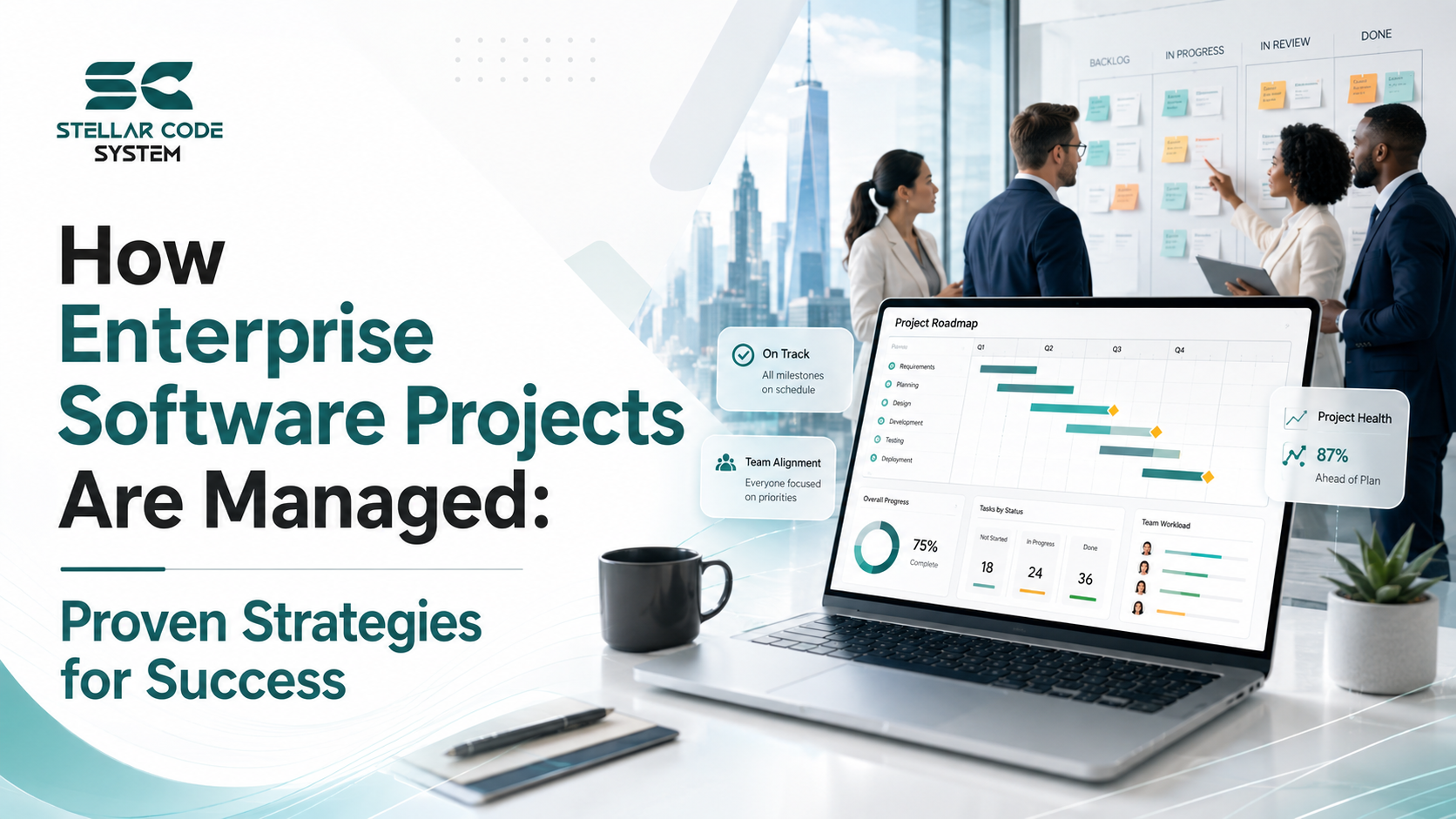
How Enterprise Software Projects Are Managed: Proven Strategies for Success
Enterprise software projects rarely fail because of coding problems alone.
In most cases, the real issues start much earlier: unclear requirements, poor planning, weak stakeholder alignment, unrealistic timelines, fragmented communication, or a lack of project governance.
Over the years, I've worked on enterprise platforms ranging from SaaS products and financial systems to large-scale business process automation initiatives. The pattern is usually the same. Teams focus heavily on technology while underestimating coordination, leadership, documentation, compliance, and decision-making.
Unlike smaller applications, enterprise systems often support critical business operations across multiple departments. A mistake in architecture, integration, security planning, or execution can impact thousands of users and create significant business risk.
Understanding how enterprise software projects are actually managed helps organizations improve delivery, reduce risk, and build systems that remain maintainable for years.

What Is an Enterprise Software Project?
Defining Enterprise Software
Enterprise software refers to large-scale applications designed to support organizational operations, workflows, and strategic objectives.
Examples include:
- ERP systems
- CRM platforms
- Healthcare management systems
- Financial software
- Supply chain management platforms
- Human resource systems
- Enterprise analytics platforms
These solutions typically serve multiple business units and require extensive integration, security, and long-term maintenance.
Characteristics of Enterprise Software Projects
Enterprise application development differs from traditional software projects because of several factors:
Large User Base
Enterprise software is designed to support a significant number of users across departments, locations, and business units. As user volume grows, performance, reliability, and scalability become critical factors. Systems must handle concurrent activity without affecting the user experience.
Multiple Stakeholders
Enterprise projects involve various stakeholders with different goals and expectations. Executives focus on business outcomes, while operational teams prioritize efficiency and usability. Effective collaboration and communication are essential to balance competing requirements and ensure project alignment.
Complex Integrations
Most enterprise platforms must connect with existing systems, third-party applications, and external services. These integrations enable seamless data flow across the organization but also increase technical complexity. Careful planning helps prevent compatibility and data consistency issues.
High Security Requirements
Enterprise applications often manage sensitive business and customer information. Strong security measures, regular auditing, compliance validation, and access controls are necessary to reduce risks. Security must be considered throughout the entire software development lifecycle.
Long-Term Maintenance Needs
Unlike short-term projects, enterprise systems are expected to remain operational for many years. Ongoing maintenance includes performance optimization, security updates, feature enhancements, and infrastructure modernization. A sustainable architecture helps reduce future technical debt and operational costs.

Why Enterprise Software Projects Require Structured Management
Higher Business Risk
Enterprise software often supports critical business operations, making project success essential for organizational performance. Issues such as system failures, security breaches, or deployment problems can directly affect revenue, productivity, and customer satisfaction. This level of risk requires careful planning, oversight, and risk management throughout the project lifecycle.
A failed deployment can disrupt critical business functions.
Larger Development Teams
Enterprise projects typically involve multiple roles, including developers, architects, QA engineers, DevOps specialists, business analysts, and stakeholders. Coordinating work across large teams can be challenging without clearly defined responsibilities and communication processes. Effective collaboration is essential for maintaining project momentum and delivery quality.
Projects often involve:
- Developers
- QA engineers
- Architects
- DevOps specialists
- Business analysts
- Product owners
- Executive stakeholders
Without proper coordination, delivery quickly becomes difficult.
Regulatory and Compliance Requirements
Many enterprise applications must comply with industry regulations related to security, privacy, auditing, and data management. These requirements influence architecture decisions, development practices, testing procedures, and deployment strategies. Failure to meet compliance standards can result in legal, financial, and operational consequences.
Many industries must meet strict compliance standards related to:
- Security
- Privacy
- Data retention
- Auditing
- Governance
Compliance impacts architecture, documentation, testing, and deployment decisions.
Cross-Department Collaboration
Enterprise software often impacts multiple departments across an organization, each with unique goals and requirements. Successful projects require ongoing collaboration between business teams, operational staff, and technical specialists. Strong alignment helps ensure the final solution supports broader organizational objectives.
Budget and Timeline Complexity
Managing enterprise projects involves balancing budgets, resources, schedules, vendors, and business priorities. Large-scale initiatives often have multiple dependencies that can affect delivery timelines and costs. Effective planning and continuous monitoring help reduce delays and keep projects within budget.
Enterprise projects involve:
- Budgeting
- Forecasting
- Resource allocation
- Scheduling
- Procurement planning
- Vendor management
Poor planning often creates delivery delays and cost overruns.
The Enterprise Software Project Management Lifecycle
Phase 1 – Business Discovery and Requirement Gathering
This phase determines whether the project solves the right problem.
Identifying Business Goals
The first step is understanding:
- Business objectives
- Success metrics
- Operational challenges
- Strategic priorities
Stakeholder Interviews
Teams gather input from decision-makers and end users. This improves transparency and stakeholder alignment.
Process Mapping
Existing workflows are documented to identify inefficiencies and automation opportunities.
Requirement Documentation
Requirements analysis creates a shared understanding of:
- Functional needs
- Technical constraints
- Security expectations
- Compliance obligations
Poor documentation at this stage creates problems later.
Phase 2 – Project Planning and Scoping
Once requirements are approved, planning begins.
Defining Deliverables
Clear deliverables improve accountability and execution.
Resource Allocation
Project leaders assign:
- Engineers
- Architects
- QA resources
- Infrastructure specialists
Budget Planning
Budgeting must account for:
- Development
- Testing
- Infrastructure
- Licensing
- Support
- Maintenance
Timeline Creation
Milestones and project roadmaps help track progress throughout the software delivery lifecycle.
Phase 3 – Architecture and Technical Design
This phase establishes the technical foundation.
System Architecture Planning
Architecture decisions influence scalability, reliability, performance, and sustainability.
Database Design
Data models must support both current and future operational needs.
Security Planning
Security controls are designed before development begins. This includes:
- Authentication
- Authorization
- Auditing
- Encryption
Integration Strategy
Enterprise systems often depend on multiple integrations. A strong integration strategy reduces future technical debt.
Phase 4 – Software Development
Execution begins once planning and architecture are approved.
Agile Sprint Planning
Most modern enterprise teams use iterative delivery models. Prioritization becomes critical because enterprise backlogs grow rapidly.
Feature Development
Development focuses on delivering business value while maintaining quality.
Code Reviews
Code reviews improve consistency, knowledge sharing, and standardization.
Continuous Integration
Automation supports faster validation and more reliable deployments.
Phase 5 – Quality Assurance and Testing
Testing is one of the most important enterprise project activities.
Functional Testing
Validates that requirements are implemented correctly.
Performance Testing
Ensures systems remain stable under production workloads.
Security Testing
Identifies vulnerabilities before deployment.
User Acceptance Testing
Business users verify that the solution supports real operational workflows.
Phase 6 – Deployment and Launch
Many enterprise projects underestimate deployment complexity.
Production Environment Setup
Infrastructure must be configured and validated.
Data Migration
Migration planning often becomes one of the highest-risk activities.
Rollout Strategy
Organizations typically choose between:
- Full deployment
- Phased rollout
- Pilot launch
Go-Live Support
Dedicated support teams monitor the launch and address issues quickly.
Phase 7 – Ongoing Maintenance and Optimization
Enterprise software management does not end after deployment.
Monitoring Performance
Monitoring helps detect reliability and performance issues early.
Security Updates
Security maintenance is an ongoing responsibility.
Feature Enhancements
Business needs evolve continuously.
Technical Support
Support teams handle incidents, troubleshooting, and operational issues.
Key Roles in Enterprise Software Project Management
Project Manager
The Project Manager oversees the entire project lifecycle, ensuring that timelines, budgets, and deliverables remain on track. They coordinate teams, manage resources, facilitate communication, and address risks as they arise. Their primary goal is to keep the project aligned with business objectives and delivery expectations.
Product Owner
The Product Owner acts as the bridge between business stakeholders and the development team. They prioritize requirements, define product goals, and ensure that development efforts focus on delivering the highest business value. Clear prioritization helps teams make informed decisions throughout the project.
Business Analyst
Business Analysts gather, analyze, and document business requirements to ensure the software solves the right problems. They work closely with stakeholders to understand processes, identify improvement opportunities, and translate business needs into actionable specifications for development teams.
Solution Architect
The Solution Architect designs the overall technical structure of the system. They make critical decisions regarding architecture, integrations, scalability, security, and technology selection. Their work ensures that the solution can support both current and future business requirements.
Software Developers
Software Developers are responsible for building, testing, and maintaining application features. They transform requirements and technical designs into functional software while following coding standards and best practices. Their work directly impacts system quality, performance, and maintainability.
QA Engineers
QA Engineers ensure that the software meets quality standards before release. Through testing and validation, they identify defects, verify requirements, and help maintain system reliability. Their involvement reduces production issues and improves the overall user experience.
DevOps Engineers
DevOps Engineers manage infrastructure, deployment pipelines, and automation processes that support software delivery. They help improve system reliability, streamline deployments, and ensure operational stability. Their role is essential for maintaining efficient and scalable development workflows.
Executive Stakeholders
Executive Stakeholders provide strategic leadership and business oversight throughout the project. They approve budgets, establish priorities, and make key decisions that influence project direction. Their support helps ensure alignment between technology investments and organizational goals.

Enterprise Project Management Methodologies
Agile Project Management
Agile Project Management focuses on delivering software through iterative development cycles and continuous feedback. It allows teams to adapt quickly to changing business requirements while maintaining steady progress. This flexibility makes Agile a popular choice for enterprise transformation and modernization projects.
Scrum Framework
Scrum is a structured Agile framework that organizes work into short development cycles known as sprints. Teams regularly review progress, prioritize tasks, and adjust plans based on feedback. This approach improves transparency, collaboration, and the speed of feature delivery.
Kanban Methodology
Kanban helps teams manage workflows by visualizing tasks and limiting work in progress. It is particularly effective for operational environments that require continuous delivery and ongoing maintenance. The methodology improves efficiency by helping teams identify and eliminate workflow bottlenecks.
Waterfall Approach
Waterfall follows a sequential project management process where each phase is completed before the next begins. It is often used in projects with clearly defined requirements and strict regulatory or compliance obligations. This structured approach provides predictability and detailed documentation throughout the project lifecycle.
Hybrid Project Management Models
Hybrid project management combines Agile delivery practices with traditional governance and planning frameworks. This approach allows organizations to maintain flexibility during development while preserving oversight, compliance, and reporting requirements. Many enterprises adopt hybrid models to balance adaptability with operational control.

Common Challenges in Enterprise Software Projects
Changing Requirements
Business needs and priorities often change as projects progress and new information becomes available. While adjustments can improve outcomes, frequent requirement changes may disrupt planning and development efforts. Effective change management helps teams adapt without significantly impacting delivery timelines.
Scope Creep
Scope creep occurs when additional features or requirements are introduced without proper evaluation or approval. Over time, these changes can increase project complexity, extend schedules, and raise costs. Clear governance and requirement prioritization are essential for maintaining project focus.
Legacy System Integration
Many enterprises rely on older systems that were not designed to work with modern technologies. Integrating these systems can create technical challenges related to compatibility, performance, and data consistency. Careful planning is required to minimize disruption and reduce implementation risks.
Communication Gaps
Enterprise projects involve numerous stakeholders, teams, and decision-makers across the organization. Without clear communication processes, misunderstandings can lead to delays, conflicting priorities, and project inefficiencies. Consistent communication helps maintain alignment and improve collaboration.
Security and Compliance Issues
Security and compliance requirements often influence architecture, development, testing, and deployment decisions. Organizations must ensure that systems meet regulatory standards while protecting sensitive data and business operations. Addressing these requirements early reduces risks and costly rework later.
Resource Constraints
Even well-funded organizations can face challenges related to staffing, expertise, and resource availability. Competing priorities and limited capacity may affect project schedules and delivery quality. Effective resource planning helps teams balance workloads and maintain productivity throughout the project lifecycle.

Best Practices for Managing Enterprise Software Projects Successfully
Align Technology With Business Goals
Technology decisions should always support clearly defined business objectives rather than focusing solely on technical preferences. When development efforts align with organizational goals, projects are more likely to deliver measurable value. This approach helps ensure that resources are invested in features that drive meaningful outcomes.
Establish Clear Governance
Strong governance provides structure for decision-making, accountability, and project oversight. It helps teams manage risks, control scope changes, and maintain alignment with strategic objectives. Clear governance processes also improve transparency across stakeholders and project teams.
Prioritize Stakeholder Communication
Regular communication keeps stakeholders informed and helps prevent misunderstandings throughout the project lifecycle. Effective communication includes progress updates, risk discussions, milestone reviews, and requirement changes. Consistent engagement ensures that expectations remain aligned and issues are addressed early.
Effective communication should include:
- Status reporting
- Risk discussions
- Milestone reviews
- Requirement updates
Use Iterative Delivery Models
Iterative delivery breaks large projects into smaller, manageable releases that provide value incrementally. This approach allows teams to gather feedback, adapt to changing requirements, and reduce implementation risks. It also improves visibility into project progress and delivery performance.
Automate Testing and Deployment
Automation helps teams improve software quality while reducing manual effort and human error. Automated testing identifies issues earlier in the development process, while automated deployments support faster and more reliable releases. Together, these practices enhance efficiency, reliability, and operational consistency.
Measure Progress With KPIs
Key Performance Indicators (KPIs) provide objective insights into project performance and delivery effectiveness. Metrics such as delivery velocity, defect rates, deployment frequency, system performance, and user adoption help teams monitor progress. Tracking these indicators supports informed decision-making and continuous improvement.
Track metrics such as:
- Delivery velocity
- Defect rates
- Deployment frequency
- System performance
- User adoption

Enterprise Software Project Management Tools Commonly Used by US Companies
Commonly used platforms include:
- Jira Software
- Microsoft Project
- Azure DevOps
- Asana
- Monday.com
The specific tool matters less than having disciplined processes around planning, monitoring, collaboration, and execution.

How to Choose the Right Enterprise Software Development Partner
Evaluate Technical Expertise
A development team should have proven experience building and managing enterprise-scale software systems. For organizations evaluating enterprise software development services for US companies it is important to review past projects, technical capabilities, and expertise in architecture, integrations, security, and scalability. Relevant experience helps reduce technical risks and improve project outcomes.
Review Industry Experience
Industry-specific knowledge allows teams to better understand business processes, regulations, and operational challenges. A partner with experience in your sector can make more informed decisions and avoid common implementation mistakes. This often leads to faster delivery and smoother adoption.
Assess Communication Processes
Clear communication is essential for keeping stakeholders aligned throughout the project lifecycle. Evaluate how the team handles progress reporting, requirement discussions, issue resolution, and feedback management. Strong communication helps prevent misunderstandings and project delays.
Understand Delivery Methodology
A reliable development partner should follow a structured approach to planning, execution, testing, deployment, and maintenance. Understanding their methodology provides insight into how they manage risks, timelines, and quality. Consistent processes generally lead to more predictable project delivery.
Verify Post-Launch Support Capabilities
Enterprise software requires continuous monitoring, maintenance, and optimization after launch. Assess whether the partner offers ongoing technical support, security updates, bug fixes, and feature enhancements. Strong post-launch support helps ensure long-term system reliability and performance.

Future Trends in Enterprise Software Project Management
AI-Assisted Project Planning
Artificial intelligence is helping project teams make more accurate decisions throughout the planning process. AI-powered tools can improve forecasting, scheduling, resource allocation, and prioritization by analyzing historical project data. This helps organizations reduce uncertainty and manage risks more effectively.
DevSecOps Adoption
DevSecOps integrates security practices directly into software development and deployment workflows. Instead of treating security as a final step, teams address vulnerabilities throughout the development lifecycle. This approach improves compliance, reduces risks, and strengthens overall software quality.
Cloud-Native Architectures
More organizations are adopting cloud-native architectures to improve scalability, flexibility, and operational efficiency. These systems are designed specifically for cloud environments using technologies such as containers and microservices. Cloud-native approaches help businesses respond faster to changing demands.
Low-Code Enterprise Platforms
Low-code platforms allow organizations to build and deploy business applications with less manual coding. This accelerates implementation timelines and enables faster workflow automation. Many enterprises use low-code solutions to improve productivity and support digital transformation initiatives.
Predictive Analytics for Project Delivery
Predictive analytics uses data-driven insights to identify potential project risks before they become major issues. By analyzing trends, performance metrics, and historical outcomes, organizations can make proactive decisions. This improves project delivery accuracy and helps teams stay on schedule and within budget.
Frequently Asked Questions
Enterprise software project management is the structured process of planning, coordinating, developing, testing, deploying, and maintaining large-scale business software systems.
Most projects range from six months to several years depending on scope, integrations, compliance requirements, and organizational complexity.
There is no universal answer. Many successful organizations use hybrid models that combine Agile delivery with formal governance and oversight.
Common causes include unclear requirements, poor stakeholder alignment, weak communication, inadequate planning, and uncontrolled scope changes.
Costs vary significantly based on architecture, integrations, team size, compliance requirements, infrastructure needs, and long-term maintenance expectations.
Typical roles include project managers, product owners, business analysts, architects, developers, QA engineers, DevOps specialists, and executive stakeholders.
Conclusion
Successful enterprise software projects are not driven solely by technical excellence. They succeed because organizations combine strong governance, careful planning, disciplined execution, effective communication, and continuous optimization.
The most successful teams understand that enterprise software development is fundamentally a coordination challenge. Architecture, security, compliance, scalability, integrations, documentation, and stakeholder management must remain aligned throughout the entire software delivery lifecycle.
When businesses invest in structured processes, clear accountability, realistic roadmaps, and continuous collaboration, enterprise systems become far more reliable, maintainable, and capable of supporting long-term digital transformation goals.
Reference
Written by

Paras Dabhi
VerifiedFull-Stack Developer (Python/Django, React, Node.js)
I build scalable web apps and SaaS products with Django REST, React/Next.js, and Node.js — clean architecture, performance, and production-ready delivery.
LinkedIn