
Software Development Cost In Ahmedabad For Startups
A situation I see often: a startup founder wants to build an MVP and asks three development teams for quotes.
One says ₹3–4 lakh. Another says ₹8 lakh. A third says ₹15 lakh.
The founder assumes someone is overcharging. But in most cases, the difference comes from how each team interprets the scope, architecture, and long-term expectations of the product.
Software development cost in Ahmedabad for startups isn’t random. It usually comes down to how clearly the project is defined and how the team plans to build it.
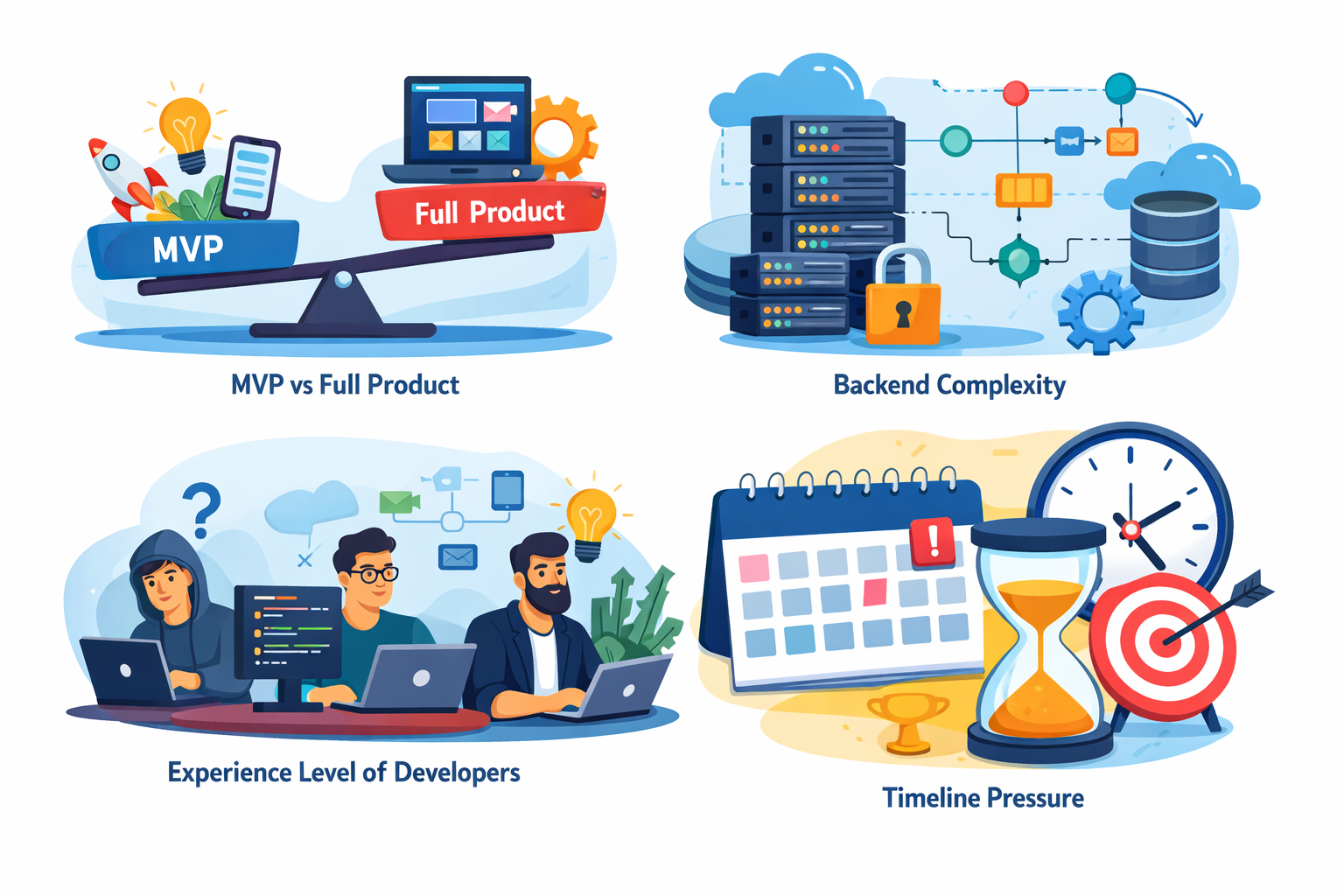
Why Software Development Cost In Ahmedabad For Startups Varies So Much
From a development perspective, pricing differences usually come from technical assumptions, not location or hourly rates.
Here are the real factors that affect cost.
MVP vs Full Product Confusion
Many startup founders say they want an MVP, but the feature list often looks like a full product. An MVP should only include the core functionality needed to validate the idea. When too many features are included early, development time and cost increase quickly. This confusion is one of the main reasons startup budgets go beyond expectations.
For example:
- User authentication
- Real-time notifications
- Admin dashboard
- Payment integration
- Analytics
- Mobile optimization
- Third-party integrations
At that point, it's not really an MVP anymore. It’s the first full version of a product.
That alone can multiply development cost.
Backend Complexity
The backend of a product often requires more work than the visible interface. Developers need to build APIs, manage databases, implement authentication systems, and ensure data security. Even simple features on the front end may involve complex backend logic, which is why strong Full Stack Development matters much more than most founders expect while estimating startup product costs. This hidden complexity often increases development time and cost.
But developers spend more time building things like:
- APIs
- Database design
- Authentication systems
- Payment workflows
- Security layers
A simple-looking product can have a complex backend architecture, which increases development time.
Experience Level of Developers
Development cost also depends on the experience level of the developers working on the project. Senior developers usually charge more because they focus on scalable architecture and long-term maintainability. Junior developers may build faster but sometimes overlook technical issues. The difference in experience can significantly affect project pricing.
But senior developers often:
- design scalable architecture
- prevent technical debt
- reduce future rebuild costs
So the price difference often reflects long-term thinking, not just coding hours.
Timeline Pressure
When startups want a product delivered in a very short timeframe, development teams often need to adjust their workflow. This can involve assigning more developers or working longer hours to meet deadlines. Rushed timelines also increase the risk of mistakes and technical debt. As a result, faster delivery often increases the overall project cost.
- add more developers
- work overtime
- take shortcuts in planning
This usually increases the overall cost.

Where Most Startup Founders Miscalculate Their Development Budget
After working with multiple early-stage startups, I’ve noticed a few patterns.
Expecting Too Many Features in Version One
Many founders try to launch their product with too many features in the first version. Instead of focusing on the core problem, they attempt to build everything at once. This increases development complexity and slows down the launch timeline. A focused feature set usually helps reduce cost and speeds up product validation.
I’ve seen founders bring a feature list that realistically needs ₹10–15 lakh but expect it to be built for ₹2–3 lakh.
The issue isn't pricing — it's scope misunderstanding.
Ignoring Backend Work
Startup founders often estimate development cost based on the user interface alone. However, much of the development effort happens behind the scenes in the backend. Tasks like database design, server setup, and API development require careful planning. Ignoring this work often leads to unrealistic project budgets.
But behind every feature there might be:
- API development
- database structure
- server setup
- testing and security checks
That work isn't visible, but it takes significant time.
No Budget for Iteration
In most software projects, the first version of a product rarely works perfectly. After launch, teams usually need time to fix bugs, improve features, and respond to user feedback. Planning for iteration helps keep the project stable after release.
You’ll need time for:
- bug fixes
- UI improvements
- feature adjustments
- testing on real users
If the budget only covers development, the project usually runs into problems later.
Underestimating Testing and Deployment
Testing and deployment are important parts of the development process that many early estimates ignore. Developers need to test the product across different devices, browsers, and use cases. Deployment also involves configuring servers and ensuring system stability.
Teams also handle:
- staging environments
- server deployment
- security testing
- performance optimization
Many early estimates ignore this phase completely.
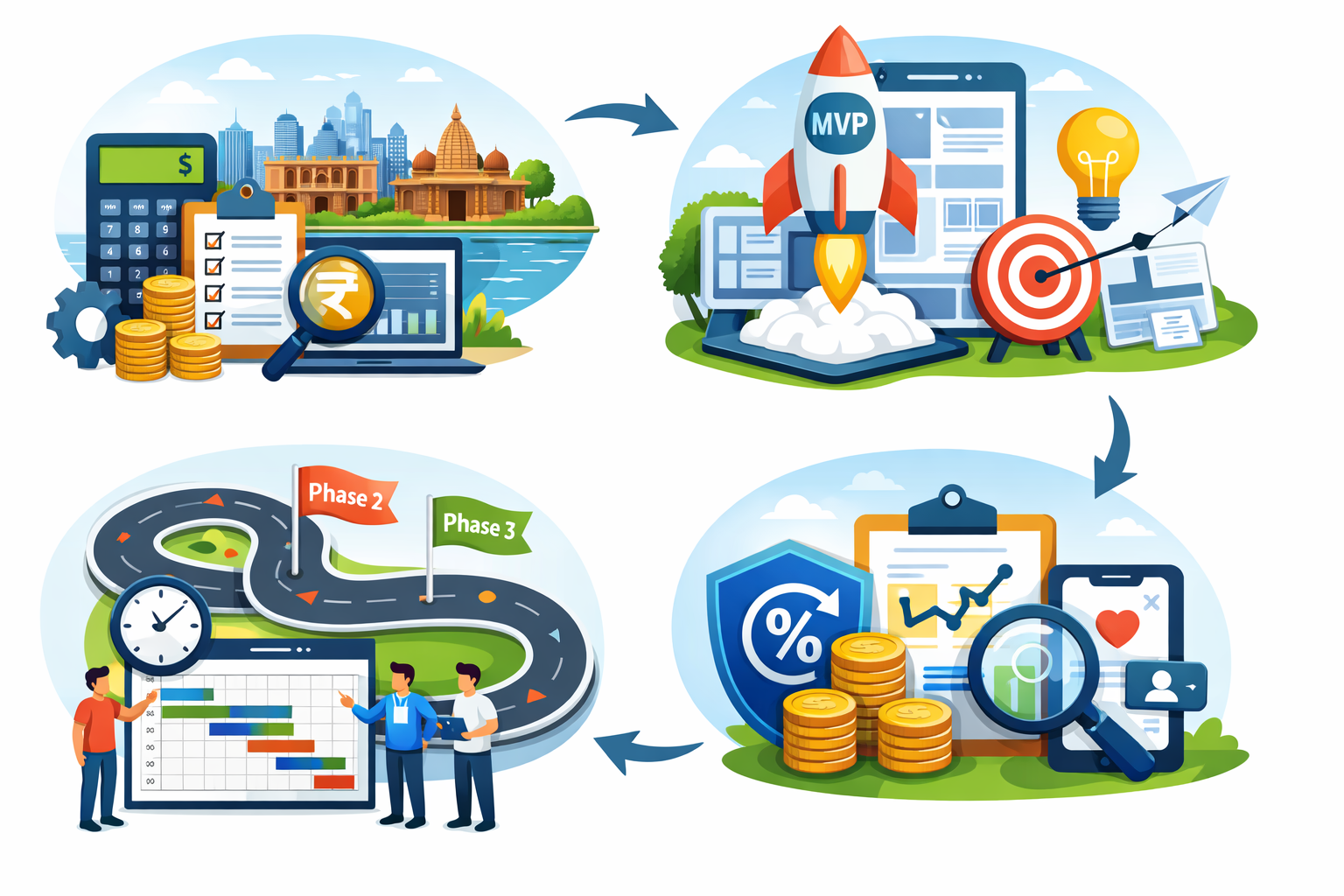
Practical Ways Startups Can Estimate Software Development Cost In Ahmedabad
If you’re planning a product, there are practical ways to estimate development cost more realistically.
Define a Clear MVP Scope
A well-defined MVP focuses only on the core features needed to validate the product idea. Instead of building everything at once, the goal is to create a working version that solves one main problem. Clear scope helps developers estimate time and cost more accurately. It also allows startups to launch faster and gather user feedback earlier.
For example:
- user signup/login
- one main feature of the product
- simple admin panel
Everything else can come later.
Break Development Into Phases
Dividing the project into development phases helps manage both cost and risk. Startups can begin with an MVP, then gradually add features based on user feedback. This approach allows teams to make improvements without committing to a large upfront investment.
Example:
- Phase 1 – MVP development
- Phase 2 – user feedback improvements
- Phase 3 – scaling and advanced features
This reduces initial risk.
Expect a Cost Buffer
Unexpected technical challenges are common in software development projects. Sometimes new requirements appear during development or certain features take longer than expected. Keeping an additional budget buffer helps handle these situations without interrupting the project. Most experienced teams recommend planning at least 20–30% extra budget.
A good rule is to plan 20–30% extra budget beyond the original estimate.
This helps avoid sudden financial pressure.
Prioritize Product Validation
The first goal of an MVP is to test whether users actually want the product. Instead of spending heavily on advanced features, startups should focus on solving one clear problem. Early validation helps avoid investing in features that users may never need. This approach helps control development costs and reduces product risk.
The goal of an MVP is to answer one question:
Do users actually want this product?
Development costs should reflect that goal.

When Cheap Development Becomes Expensive Later
Low development costs can sometimes create bigger problems later.
I’ve seen startups rebuild their entire product because of early shortcuts.
Poor Code Quality
Low-cost development sometimes results in poorly structured code. When code quality is weak, adding new features becomes difficult and bugs appear more frequently. Fixing poorly written code can take more time than building it properly in the first place. Over time, this increases the overall cost of maintaining the product.
Fixing them later can take longer than building the product again.
Lack of Scalability
A product built for a small number of users may struggle when the user base grows. If the system architecture is not designed to scale, performance issues start appearing. Proper scalability planning helps prevent expensive redevelopment later.
Scaling poorly designed systems often requires major redevelopment.
Frequent Bugs
When development is rushed or testing is limited, software tends to contain many bugs. These issues affect user experience and require constant maintenance from the development team. Frequent bug fixing slows down the addition of new features. Over time, the product becomes harder to manage.
That slows down new feature development.
Complete Product Rebuild
In some cases, startups eventually decide to rebuild their entire product. This usually happens when the original system cannot support new features or handle growth. Rebuilding a product requires additional time, resources, and planning. Many startups face this challenge when early development decisions are rushed.
This can double the total development cost.

Best Practices For Startups Hiring Development Teams In Ahmedabad
If you're building a startup product, a few practical approaches help control development cost.
Start With a Real MVP
Launching with a simple and focused MVP helps startups test their idea quickly. Instead of building a large platform, the team can start with a small set of essential features. This approach reduces development cost and speeds up the learning process. It also allows founders to improve the product based on real user feedback.
Choose Small Experienced Teams
Small development teams often communicate more effectively and make decisions faster. Startups usually get better long-term results when they work with a custom software company focused on practical business needs because experienced teams are more likely to plan around real product goals instead of just writing code. This can prevent expensive mistakes later. For many startups, a small skilled team works better than a large outsourced group.
Decision-making is usually quicker.
Avoid Unrealistic Timelines
Setting extremely short deadlines can create unnecessary pressure on the development team. Rushed development often leads to incomplete testing and poor code quality. This results in more work after the product is launched. A realistic timeline helps maintain both quality and stability.
A slightly longer timeline usually produces better results.
Build Long-Term Developer Relationships
Working with the same development team over time helps maintain consistency in the project. Developers who understand the product can implement new features faster. They also know the system architecture and previous decisions. Long-term collaboration often reduces development time and cost.
That saves time on future updates.
Conclusion
Software development cost in Ahmedabad for startups varies because every team approaches the project differently.
The biggest factor isn’t location or hourly rates — its scope clarity, technical complexity, and planning.
Startups that define a realistic MVP and plan development in phases usually spend less money over time.
Choosing the cheapest option without understanding the technical work often creates bigger costs later.
FAQ
Most startup MVPs typically cost between ₹3 lakh and ₹15 lakh depending on features, backend complexity, and integrations.
Each team estimates architecture, scalability, and development time differently, which leads to different pricing.
It can be cheaper initially, but managing multiple freelancers can become difficult for larger projects.
Most MVPs take around 2–5 months depending on the product complexity and integrations.
Yes, by limiting features to a focused MVP and building the product in phases rather than all at once.
References
Written by

Paras Dabhi
VerifiedFull-Stack Developer (Python/Django, React, Node.js)
I build scalable web apps and SaaS products with Django REST, React/Next.js, and Node.js — clean architecture, performance, and production-ready delivery.
LinkedIn