Overview
What we delivered
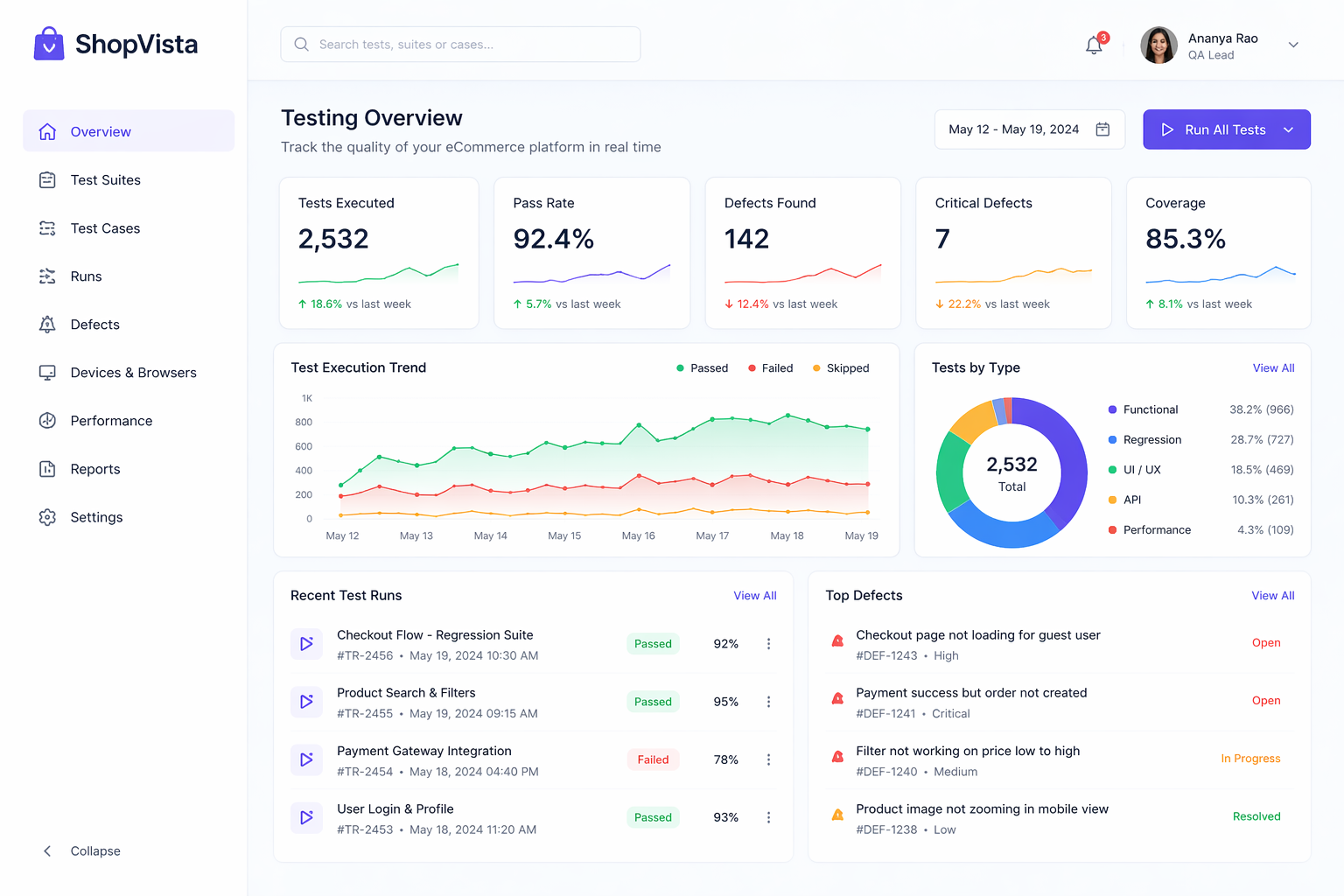
An ecommerce platform was facing cart bugs, checkout failures, and inconsistent user experience across devices. These issues were reducing conversion confidence and hurting customer experience. Stellar Code System delivered a structured software testing engagement focused on cross-browser coverage, checkout flow automation, and load and regression testing to improve quality, consistency, and conversion reliability.
Client
An ecommerce platform supporting multi-device customer journeys, cart and checkout workflows, and release cycles where consistency and conversion reliability were business-critical.
Challenge
The platform was experiencing cart bugs, checkout failures, and inconsistent user experience across browsers and devices. These issues directly affected purchase completion and overall customer trust.
Cart bugs affecting shopping flow
Checkout failures reducing purchase completion
Inconsistent user experience across devices
Need for stronger QA coverage around conversion-critical journeys
Solution
Stellar Code System implemented a QA program designed for ecommerce reliability, with strong focus on device consistency, checkout automation, and regression safety under changing releases.
1. Cross-Browser and Device Testing
Tested the platform across multiple browsers and devices
Improved consistency of customer experience across environments
Reduced layout and behavior issues on different screens
Strengthened confidence in front-end commerce journeys
2. Checkout Flow Automation
Automated key checkout workflows
Improved repeatable validation of purchase-critical flows
Reduced manual effort around checkout testing
Lowered the risk of checkout regressions during releases
3. Load and Regression Testing
Performed load testing for customer traffic scenarios
Validated stability under demand pressure
Expanded regression testing across core commerce features
Improved release safety for cart and checkout functionality
Technology Stack
QA Scope: Cross-browser, device, load, regression, and checkout automation testing
Validation Focus: Cart and checkout journey reliability across user environments
Quality Goal: Better conversion reliability and broader QA coverage for ecommerce releases
Implementation Timeline
Phase 1 (Week 1): QA audit, checkout issue review, device consistency analysis
Phase 2 (Weeks 2-3): Cross-browser testing, automation of checkout flows, regression setup
Phase 3 (Weeks 4-5): Load testing, release validation, and coverage refinement
Results
The software testing engagement improved checkout consistency, reduced customer-facing issues, and increased QA confidence across ecommerce releases.
Key Metrics:
-46% checkout issues
+52% QA coverage
+34% conversion reliability
Business Impact:
Improved checkout experience for customers across devices
Reduced revenue-impacting issues in purchase flows
Expanded QA confidence before releases
Created a more reliable ecommerce conversion journey
Client Testimonial
Words from the client
The QA improvements helped us reduce checkout issues significantly and gave us much better release confidence. Customers are seeing a more consistent experience, and our team has stronger coverage where it matters most.
Technical Highlights
Cross-browser and device testing
Checkout flow automation
Load testing
Regression testing
Cart and checkout QA validation
Ecommerce conversion reliability improvement
Future Enhancements
The platform is now ready for deeper automation and continuous quality workflows.
Continuous checkout regression suites
Visual testing across device combinations
Performance testing in peak sale periods
A/B-safe QA validation workflows
Release-quality dashboards for commerce teams
Previous case study
QA Testing for a Healthcare Management Platform
Healthcare Testing
Next case study
AI Recommendation Engine for Entertainment Platform
Entertainment AI
Let’s build yours
Want similar results for your business?
Share your requirements—we’ll propose a premium, scalable solution.